TCR Trip to Romania – Exploring the Development of Blue-Green Infrastructure in Bucharest
Supervisors: Liliana Iuga and Fabio Bayro Kaiser
Summer Semester 2026
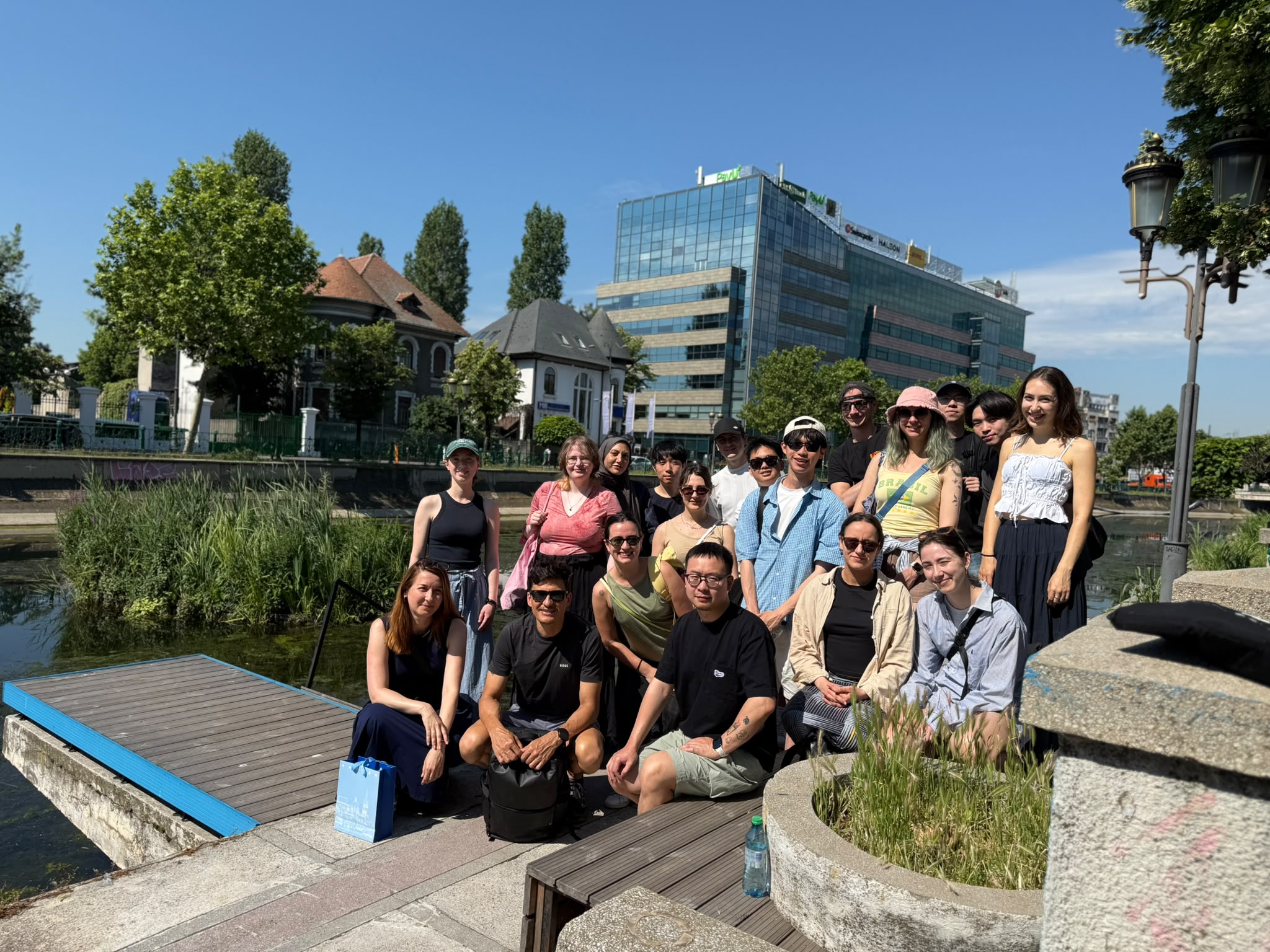
From 8–13 June 2026, seventeen international students from the TCR Master’s Program participated in the annual study trip to Romania, accompanied by academic coordinators Liliana Iuga and Fabio Bayro Kaiser. The week-long field excursion focused on the transformation of the Dâmbovița River in Bucharest and the role of civic initiatives in shaping the city’s future blue-green infrastructure.
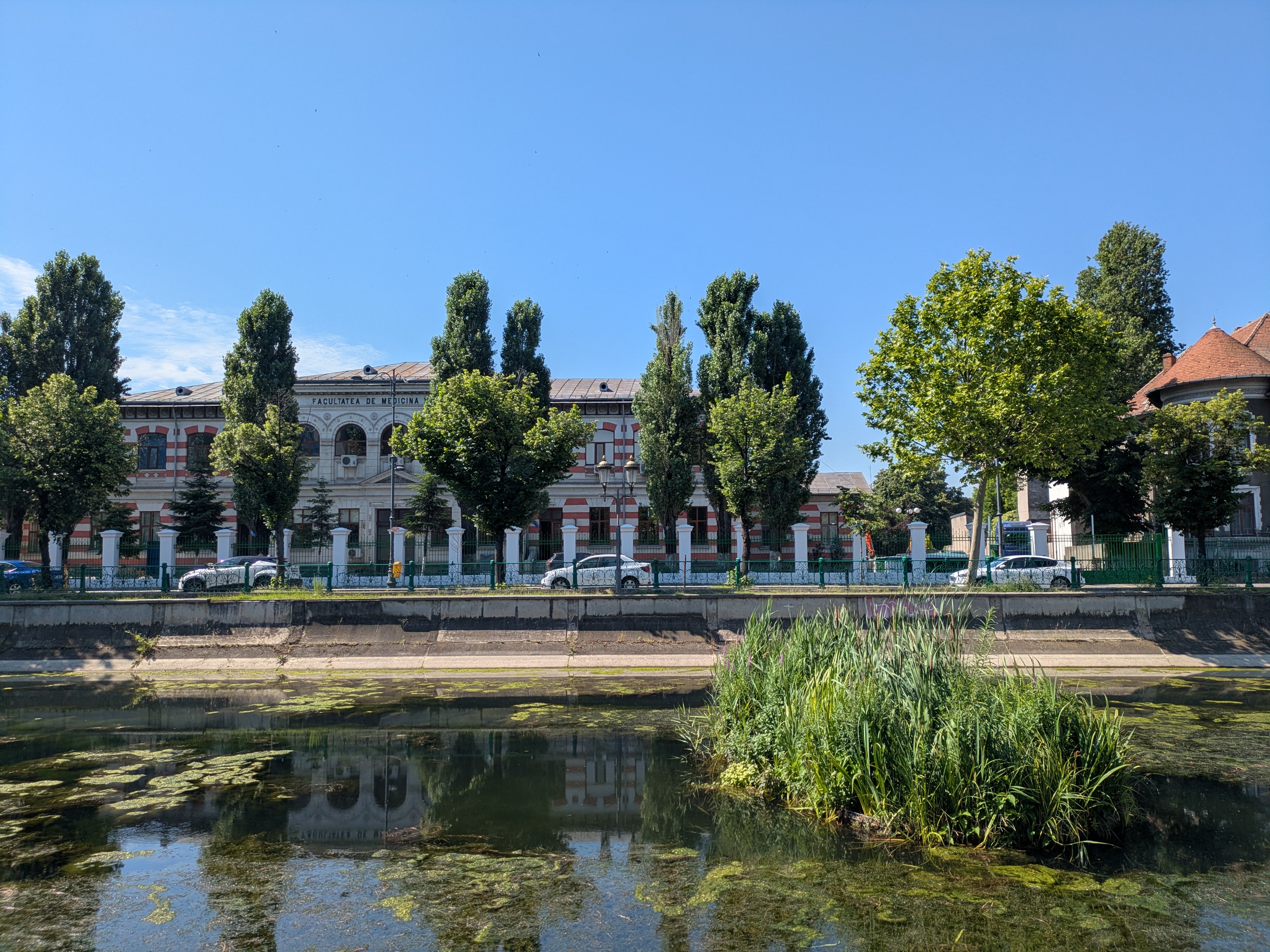
A central topic of the visit was the international competition Dâmbovița 2035, launched in October 2025 by a coalition of NGOs and professional architectural organizations. The competition envisions the Dâmbovița River as a future blue-green corridor that supports climate resilience, biodiversity, and improved quality of life, while reclaiming riverbanks as public, community-oriented spaces and reducing transit traffic. Today, however, the river functions largely like a concrete channel, separated from the city’s life.
The trip started with a visit at the Order of Architects of Romania, guided by architect and professor Irina Tulbure, who also introduced key moments in the historical evolution of the city. The group then visited the University of Architecture and Urbanism “Ion Mincu”, where they met with Professors Augustin Ioan and Angelica Stan, as well as the Faculty of Sociology at the University of Bucharest, where Professor Călin Cotoi shared insights on his research on Dâmbovița River.
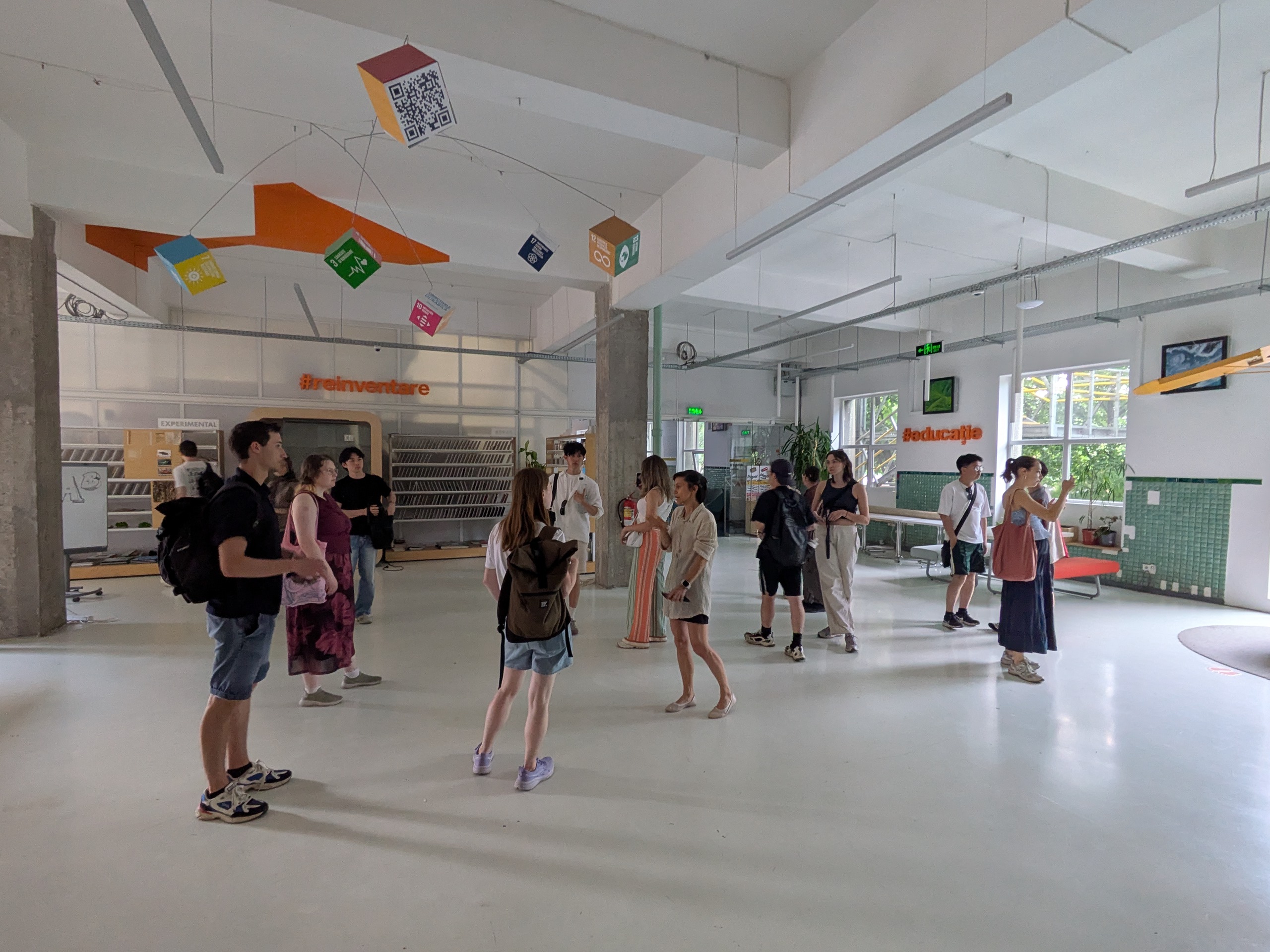
Among the highlights of the trip were visits to Parcul Natural Văcărești and NOD Makerspace, facilitated by anthropologist Ruxandra Păduraru. At NOD, students met with co-founder and architect Tamina Lolev, who presented the various stages of the Dâmbovița revitalization process—from community events and public engagement activities to idea competitions and the development of a comprehensive master plan. The visit also introduced students to the makerspace concept: a former cotton factory transformed into a space for creativity and innovation, where more than 70 freelancers and start-ups work, collaborate, and develop new skills and projects. On Thursday, the student attended the opening of the first Museum of Architecture (MuzA) in Romania.
The trip provided numerous opportunities for site visits, interdisciplinary exchange, and critical discussion. Students explored different expert perspectives on the future transformation of the Dâmbovița River and reflected on the challenges and opportunities associated with several key sites along the river.
No visit to Romania would be complete without experiencing some of its diverse cultural and historical heritage. The final two days of the trip were dedicated to excursions around Brașov, including visits to Peleș Castle in Sinaia—once the residence of the Romanian royal family—and the famous Bran Castle, widely known as “Dracula’s Castle.”
The study trip provided valuable insights into a complex topic, exposing students to the diverse institutional, ecological, and planning challenges associated with the transformation of the Dâmbovița River, while emphasizing the role of an active civic community in driving this process forward.